
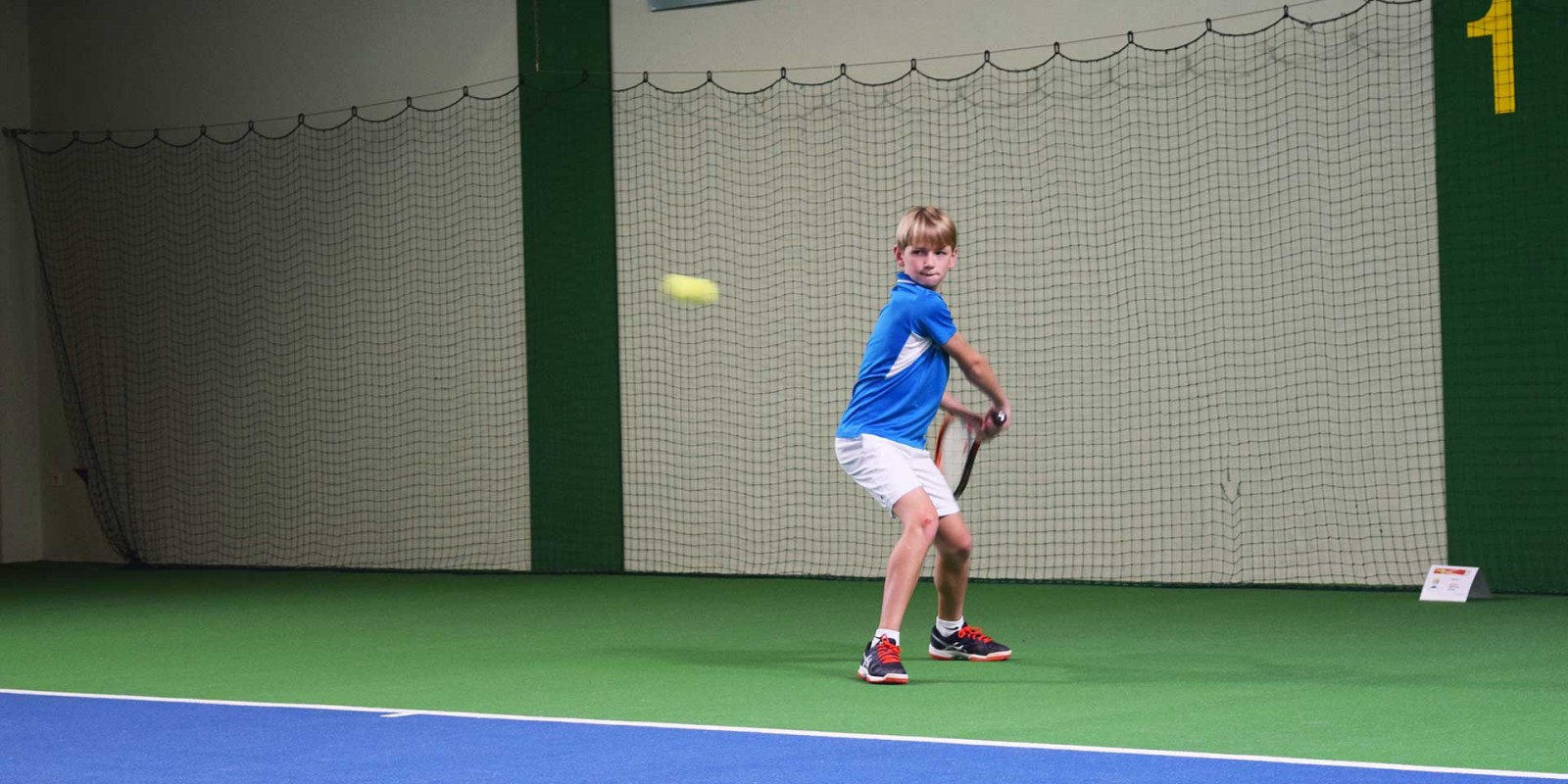
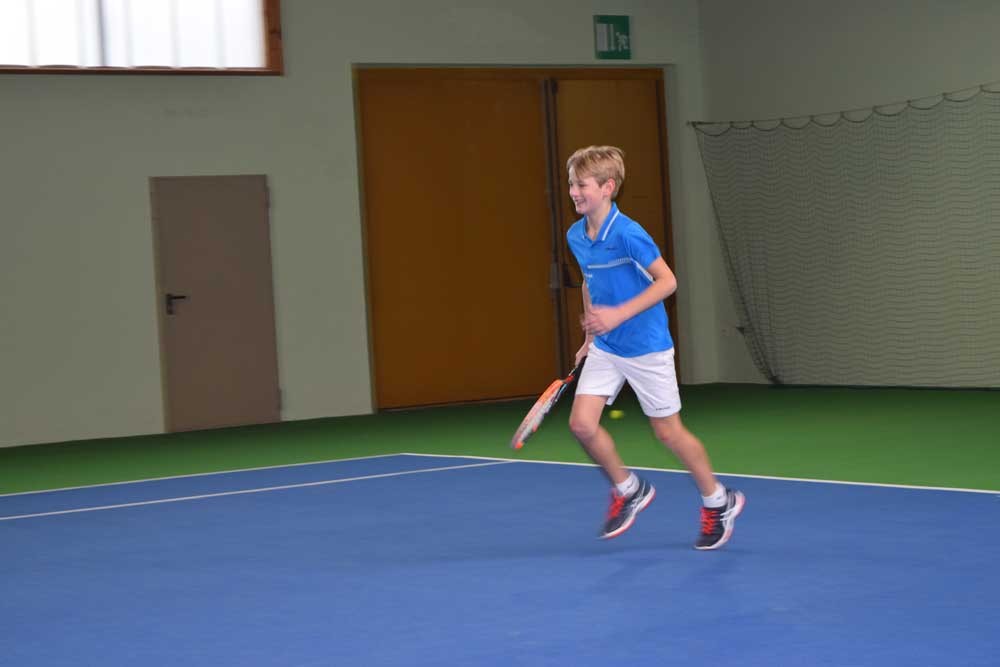
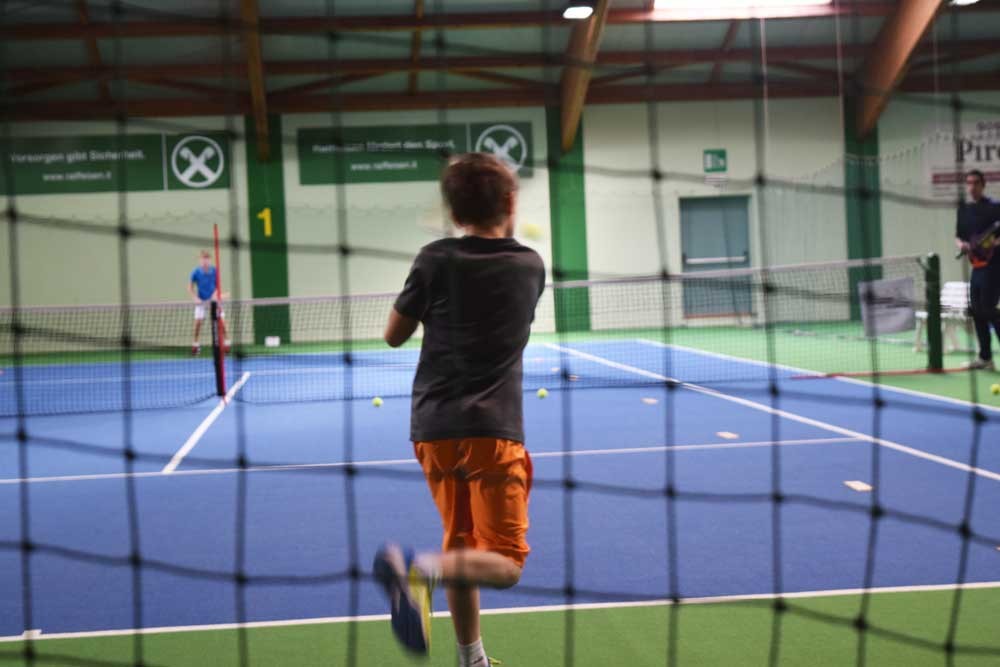
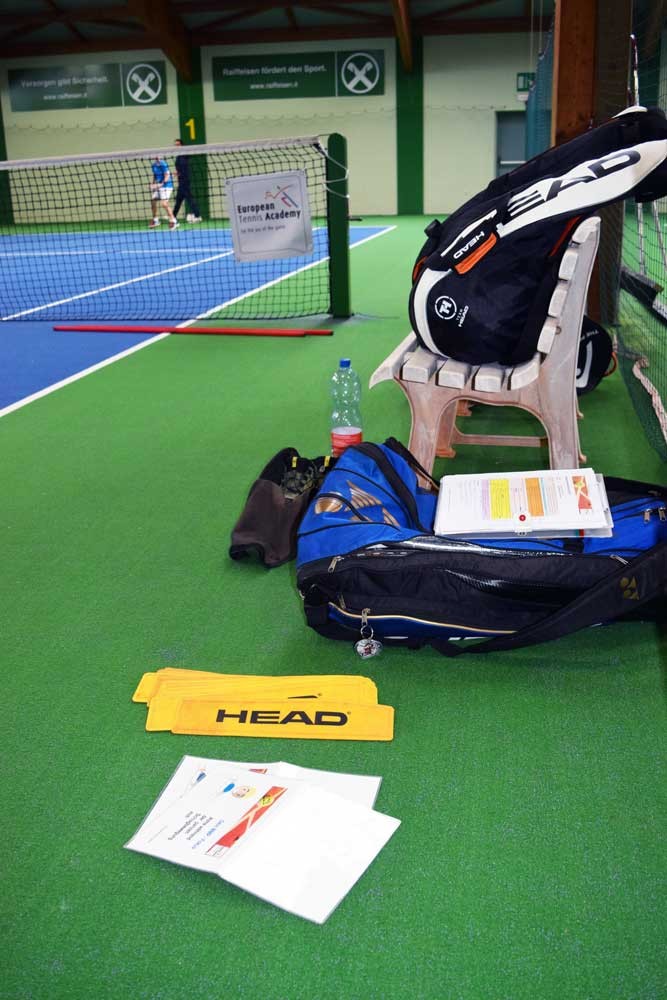
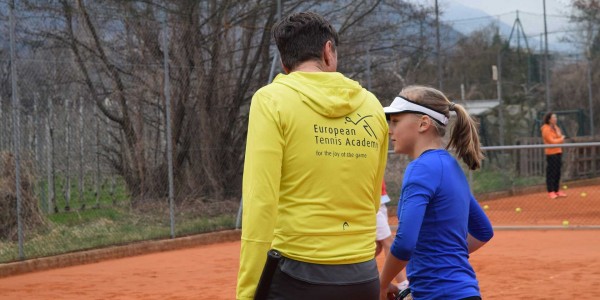
The weather wasn't exactly on our side today for the start of training on day two of the tennis camp with the European Tennis Academy . Since it was only 8 degrees Celsius at 10 a.m. and an icy wind was blowing, coach Alex decided to move the training session indoors. It was great that this was possible – the beautiful and bright four-court hall with carpet and granules is, of course, perfectly suited for this.
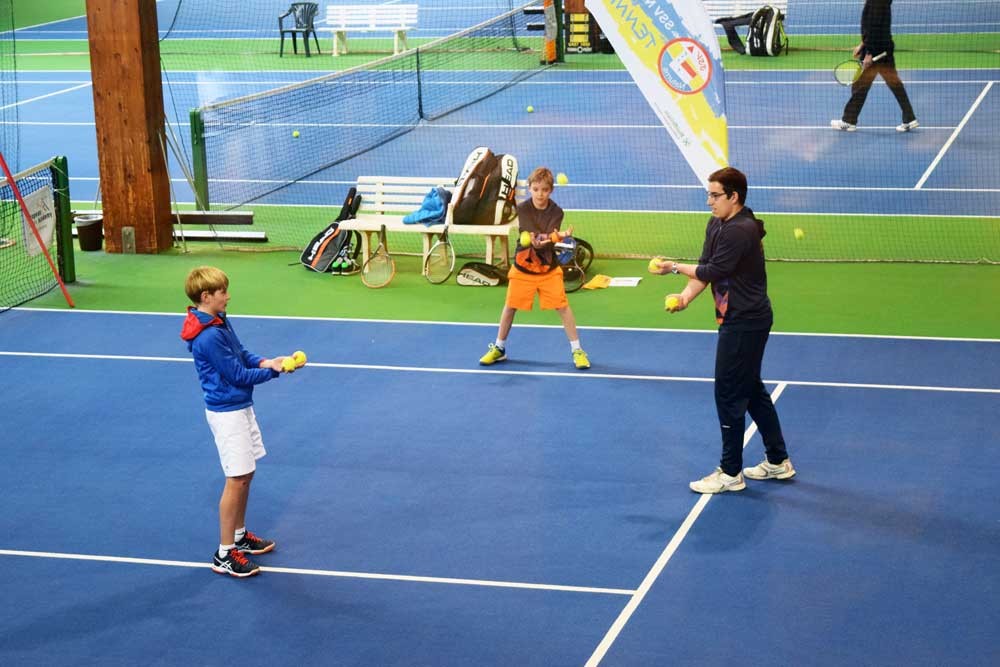
After a warm-up with ball coordination exercises, the kids were not only warmed up but also completely focused. Today's focus was on "Minimizing Unforced Errors - Gaining More Confidence ." Relaxed practice on a small court with directional instructions went quite well, with no errors, and the goal was to return three balls at least 60 times.
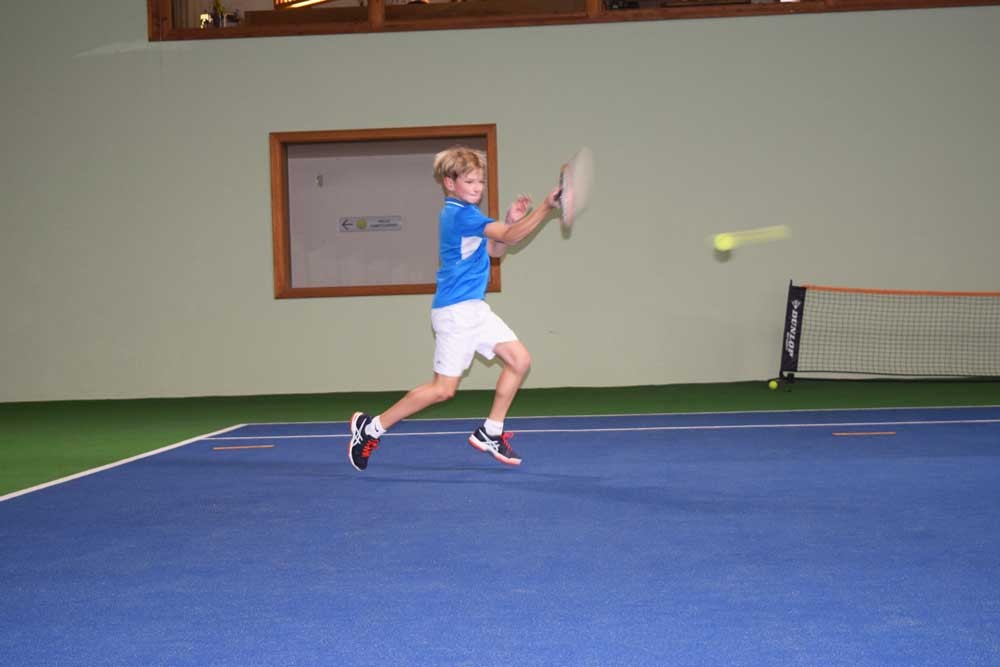
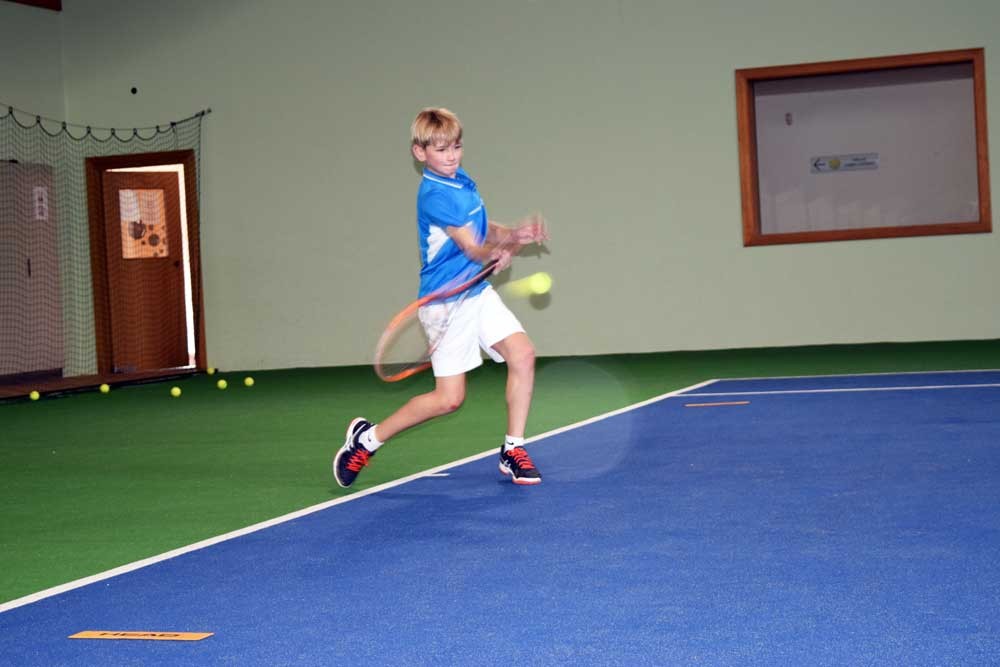
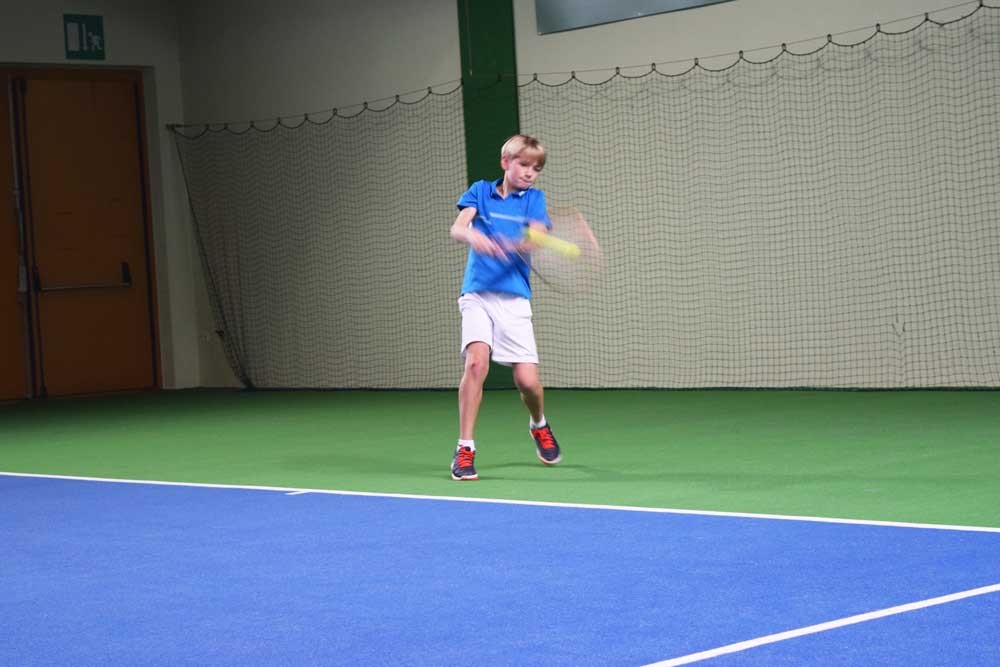
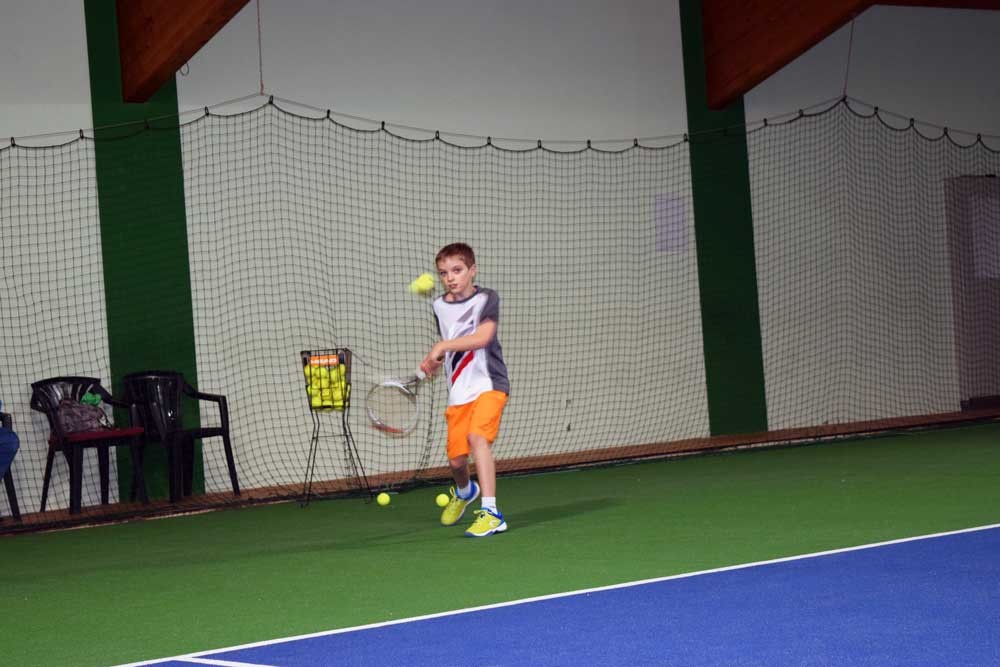
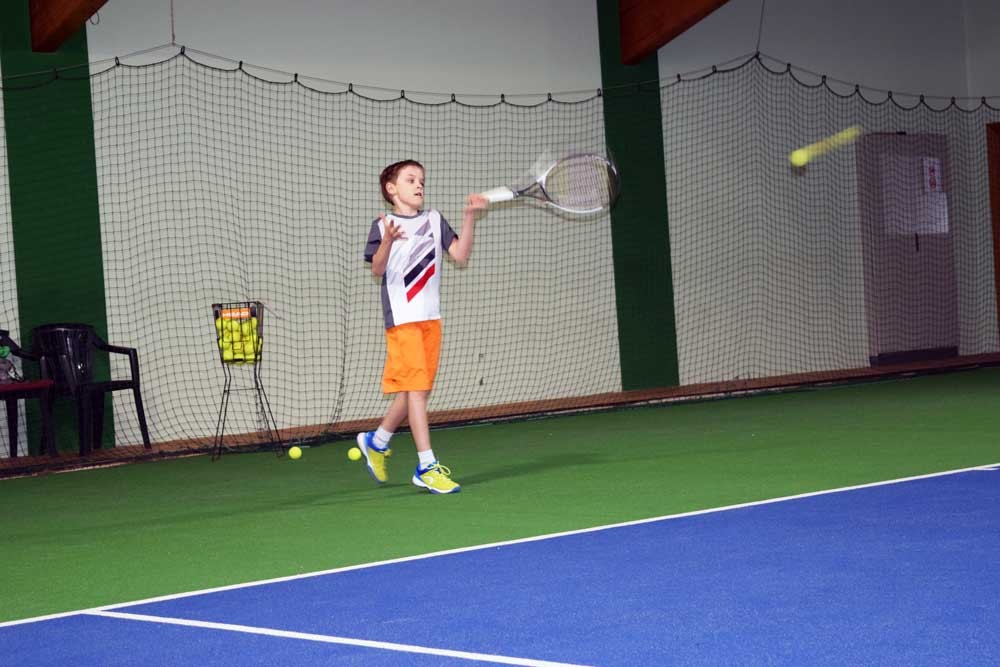
The children practiced hitting the ball from the baseline using the same principle: first forehand cross-court, then backhand cross-court.
The exercise continued through the middle – the kids played back and forth, and after each shot, they had to rate how high the ball flew over the net on a scale of 1 to 10, where 1 was the net's edge and 10 was almost touching the ceiling. A new focus had thus been established. It was amusing to observe that the children suddenly made almost no mistakes during this exercise. Afterward, Alex asked at what height the children thought they would make the fewest errors. The ideal height was determined to be between 3 and 4 on the scale.
The same principle applied not only to height but also to distance: the tee line was a 5 on the self-assessment scale, the baseline a 10. The children also had to estimate the distance of their shots after they hit the ball, with target markers to help them. A distance between 7 and 8 was considered ideal for greater consistency.
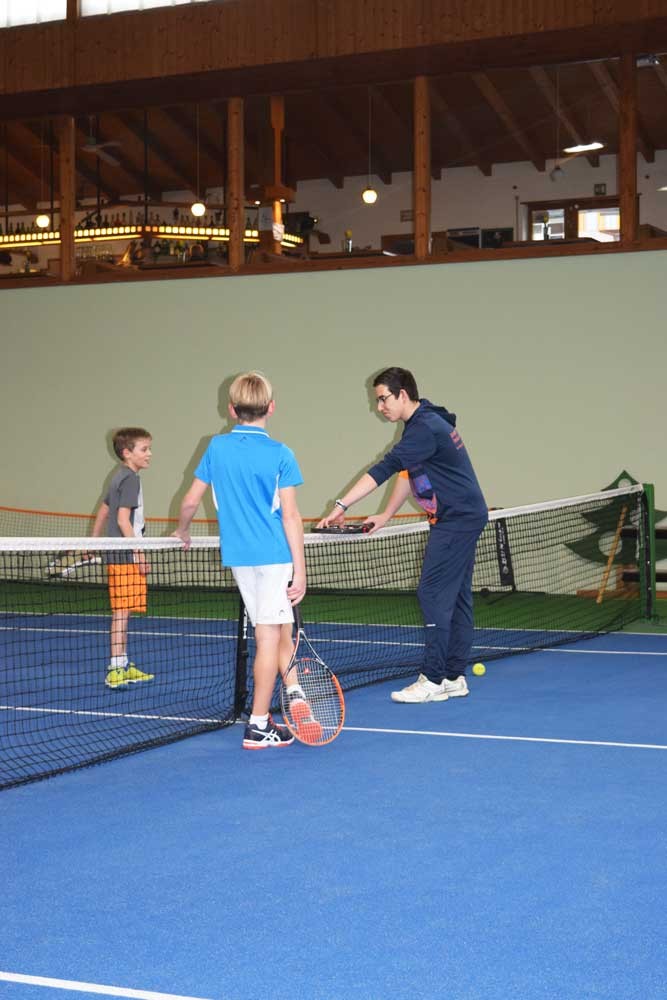
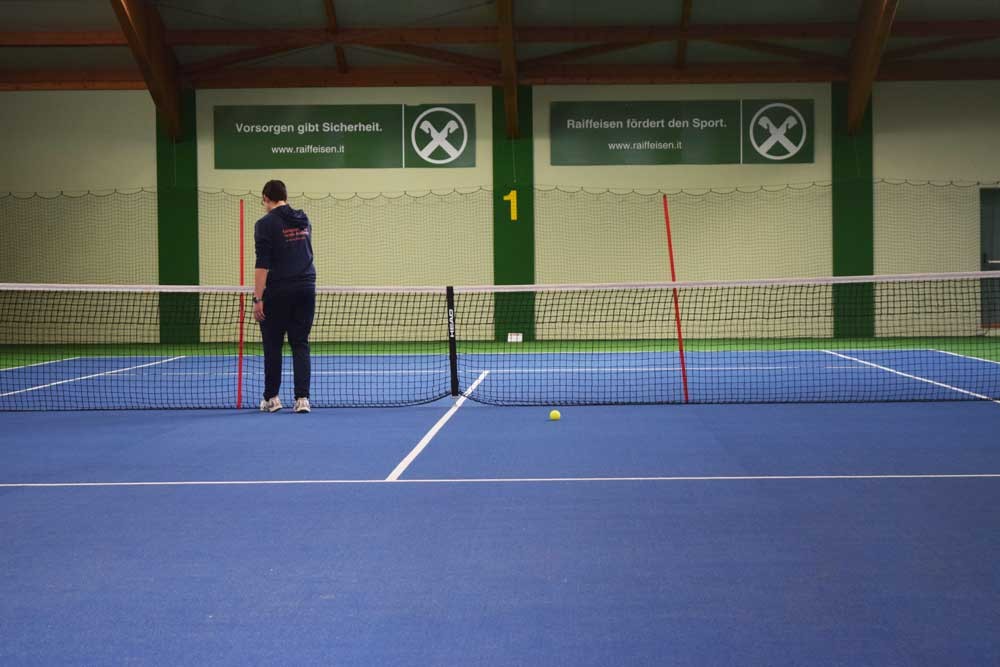
Alex then inserted two poles into the net to the left and right of the center, extending approximately 1.5 meters above the net, which corresponded to a height of 3-4 on the ball height scale. The children then played using the height of the poles, aiming for a minimum length of 7-8 meters. With these two focal points, the kids managed to keep the error rate remarkably low while maintaining a great pace.
To minimize errors when playing near the sidelines, Alex placed markers approximately 30 cm inside the sidelines: the kids were not allowed to play there. This allowed for more cross-field duels.
Finally, points were played out, with unforced errors always counting double for the opponent, and length and height should still be taken into account.
To conclude the two-hour training session, the kids practiced serving and returning. They also focused on serving with a kick and returning not so close to the sidelines – these points were intended to improve their confidence.
It was interesting to observe how the children were suddenly expected to assess themselves and reflect on their game and shots. Alex required this of the kids throughout the entire training session and repeatedly emphasized it in the feedback sessions. This was clearly a new experience for the children, but they handled it quite well – and the result was impressive!
Our daughter took a break today and watched the training session with me. At one point, she suddenly asked, "Mom, why doesn't Alex correct my technique much?" This is precisely where the European Tennis Academy from many other CAMPA training programs. Since it's impossible to completely change technique in a single week at a camp, the approach is solution-oriented, focusing on specific areas at different points. The children receive the final technical refinements from their home coaches. Not a bad concept at all, in my opinion!








Sign up now and be the first to know about new tennis hotels and tennis camps, as well as great promotions. You
can unsubscribe at any time. Please see our privacy policy.