
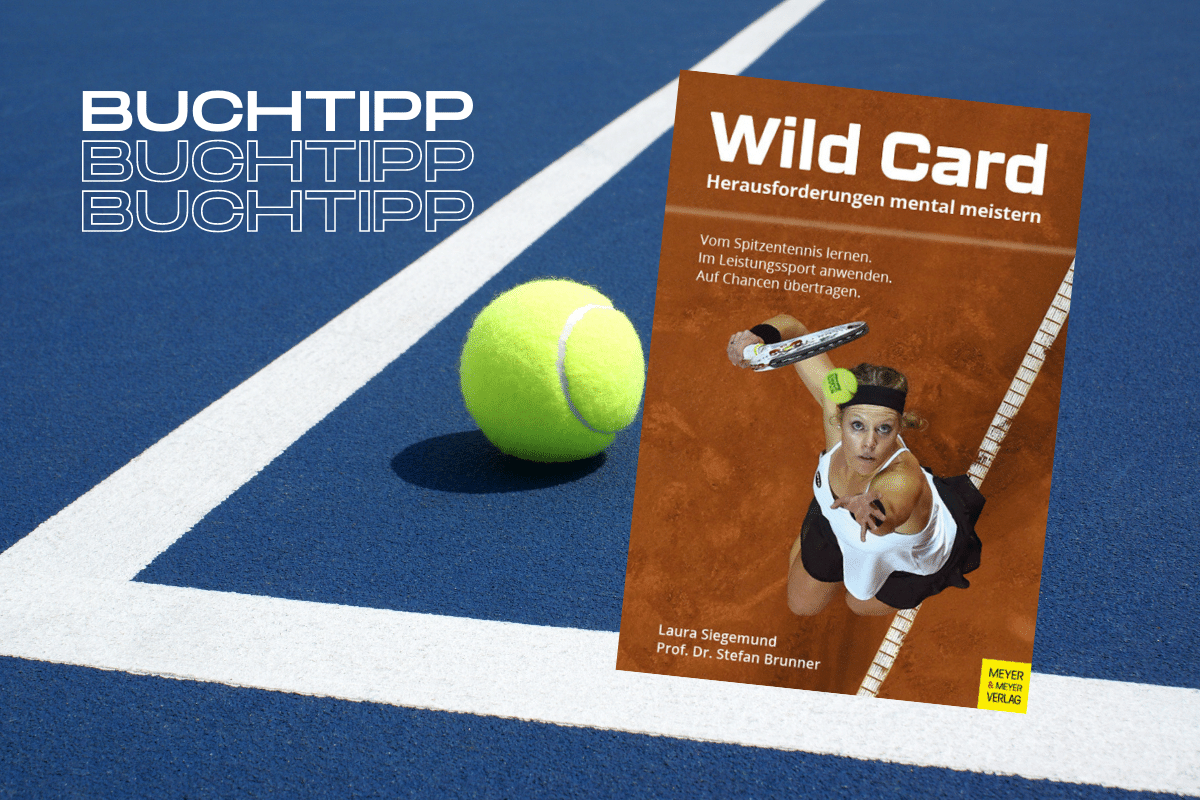
Wild Card – that's the title of the new book by Laura Siegemund and Prof. Dr. Stefan Brunner. It's a guide and handbook to help you mentally overcome challenges, both on the tennis court and in life. Because challenges abound everywhere. The book is a passion project and a long-cherished dream of the still-active tennis pro. Drawing on her experience as a top-level tennis player, her knowledge from her psychology studies, and the expertise of Prof. Dr. Stefan Brunner, this dream has blossomed into a nearly 300-page work that takes you through the highs and lows, problems and challenges of a tennis match, offering solutions to help you recognize and seize your opportunities. But read our book review for yourself!
And look forward to your chance to win two copies of Wild Card – enter now and apply by Thursday, November 17, 2022!
The book's table of contents reads like a tennis match. Chapter titles like "We Warm Up," "Start the Match," "The Game Picks Up Speed," "Overcoming the Falling Back," and "Winning the Big Points" already hint at the book's strong focus on tennis and Laura's experiences as a professional tennis player. And yes, that's true! However, the authors emphasize that the book n't solely a mental training guide for tennis players . And that's also true, because the challenges faced by professional tennis players—or indeed any ambitious tennis player—can easily be applied to anyone who wants to work on themselves, grow, and improve. Whether in their career or in sports.
In my opinion, the book's structure is very cleverly chosen and is one reason why it reads so well and smoothly. Each chapter describes the "progression of the game," supported by scientific studies and findings, and supplemented with situations from tennis as well as other sports and events. This creates a great mix of science and (tennis) practice.
In practical terms: my absolute highlights of the book were the "red boxes." Here, Laura almost always takes center stage, recounting a situation from her professional career that fits the respective chapter. For example, she explains how she gradually managed to overcome her initial nervousness more quickly during matches, how she learned to cope with external influences (very successfully!), using the 2020 French Open as an example, or what she does when she loses her concentration during a match. All small (and some big) mental hacks that are interesting for all of us!
"I've always wanted to write a book," says author Laura Siegemund in an interview with SWR. I won't go into detail about Laura Siegemund as a tennis player here. We know too much about her magnificent victories, about her incredible fighting spirit, which she displays in every match. But also about the lows she experienced, especially after serious injuries like a torn cruciate ligament. What many don't know, however, is that Laura's career was marked by significant ups and downs from a very early age. At just 12 years old, she was considered the successor to Steffi Graf – THE top talent who grew up in Metzingen, Swabia. But her career was anything but straightforward, repeatedly stalling. And then it would rapidly pick up speed again, propelling Laura to unexpected heights in her mid-twenties. Alongside her tennis career, she earned a Bachelor of Science in Psychology through distance learning and already gives lectures in the fields of competitive sports and business.
Alongside , Professor Dr. Stefan Brunner, an absolute expert in sports psychology, co-authors the book. He holds a doctorate in this field and previously studied sports science. Today, he works as a university lecturer, author, mental trainer, and coach, supporting elite athletes from a wide variety of sports.
A truly interesting book, easy to read. I particularly like the book's structure, which follows the pattern of a tennis match as it weaves through the various topics. As mentioned above, Laura's "insights" are especially valuable and offer many interesting solutions.
As with so many books on mental training, the crux of the matter lies in putting what's written in black and white into practice, whether on the court or in other challenging situations. And here, too, the book doesn't really help me personally. I would love a coaching session with Laura or Stefan, where one can begin to put the book's theoretical content into practice. Although even an hour wouldn't be enough. The action recommendations described in the book need to be practiced, just like we practice our forehand and backhand. Regularly, and with a good mental coach by your side.
The book Wild Card is definitely a start - but success only comes after long training.
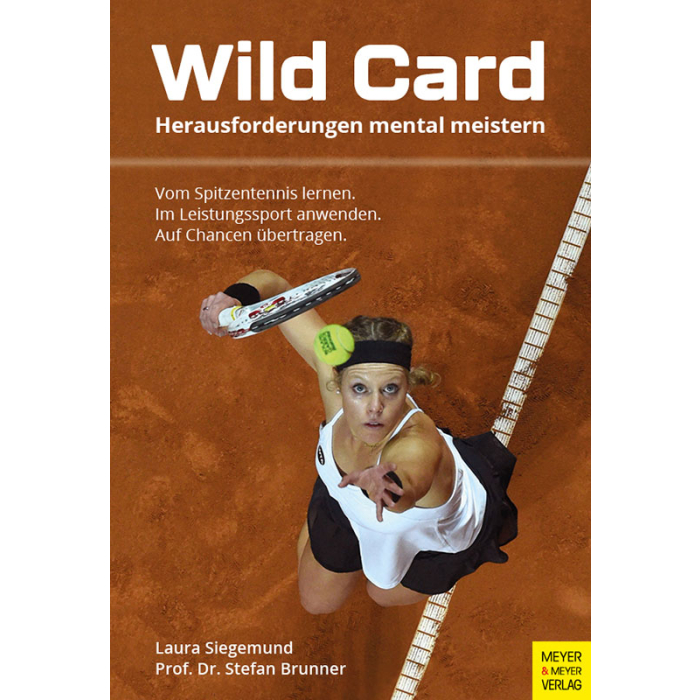

Simply fill by Thursday, November 17, 2022 (11:59 p.m.) , answer our competition question correctly, and tell us why you absolutely want to read the book Wild Card. Submit it and with a little luck, you could win. It's that easy!
The winner will be notified by email from November 19, 2022.
And one more small but necessary legal disclaimer: Legal recourse is excluded. Furthermore, by participating in prize draws, you agree to our terms and conditions .
Thanks to Meyer & Meyer Fachverlag, who provided us with the prize copies.










Sign up now and be the first to know about new tennis hotels and tennis camps, as well as great promotions. You
can unsubscribe at any time. Please see our privacy policy.