
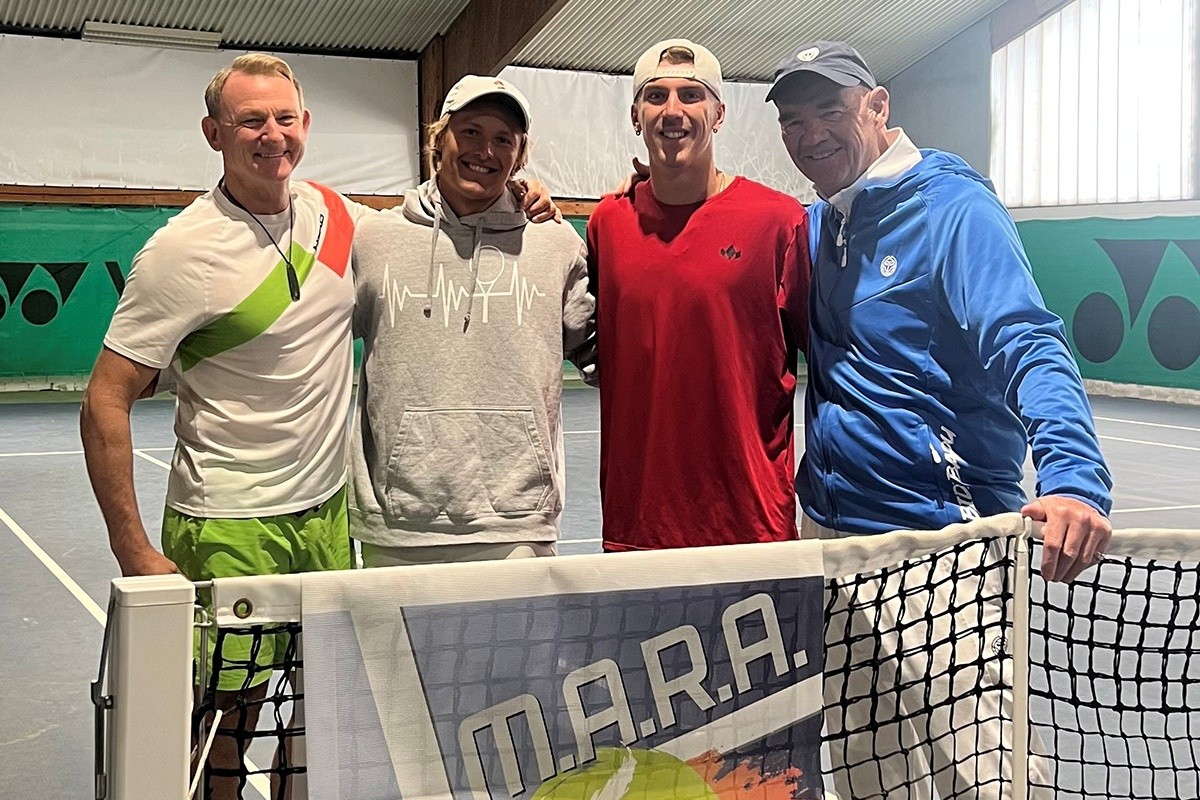
His son, Jamie Mackenzie, has been making waves as a young professional tennis player for some time now and is considered one of Germany's best up-and-coming talents on the international tennis tour. Father Justin Mackenzie not only works as a coach for TC Rheinstadion Düsseldorf, but also manages and organizes his son's activities. Even before his son's career took off, Jamie was TennisTraveller , working in various capacities around the world. Tennis entrepreneur and NRW International tournament organizer Marc Raffel, who also organizes various tennis camps both domestically and internationally throughout the year and is a long-standing partner, had a long conversation with Jamie. They talked about New Zealand tennis, his son, his goals, and, of course, the current state and future of German tennis. Two true TennisTraveller in conversation!
Marc Raffel (MR): Justin, you're from New Zealand. Why don't you live in your wonderful homeland?
Justin McKenzie (JM) : After Jamie became the junior number one in New Zealand at the age of 11, I wanted to go to Europe with him to see how he would fare against the best young European players. After some successful experiences, we decided to stay in Europe. I was also playing professional tennis at that time and found a club, RW Düsseldorf, for league matches. That helped me and us a lot.
MR:
Your life revolves around tennis. Where and when did you start playing? JM: I started playing tennis when I was eight years old, in a town called Matamata in New Zealand's North Island. Matamata is famous because it was a filming location for "The Lord of the Rings." My mother always took me to her tennis club on Saturdays, where I constantly practiced against the wall, hoping that eventually an adult would approach me to play tennis with them. When I was 18, we moved to Auckland after I became the New Zealand junior champion and was training like a professional.
MR:
Do you still work with professional tennis players from New Zealand? JM: I was once the New Zealand junior national coach and also a tour coach for three years. I coached Cameron Norrie when he was younger, and many other young New Zealand players. I also worked with the New Zealand Davis Cup team, especially when preparing for the European clay court season.
MR:
Your son Jamie is one of Germany's most promising young players. Does he really have what it takes to reach the very top? JM: Yes. From the very beginning, it was Jamie's big dream to become a professional tennis player. I always took him with me to the ATP tournaments in Auckland and the Australian Open. That, of course, fueled his dream even more. Now he's playing in the junior Grand Slams and gets to use the same courts as the big stars.
MR:
Are you Jamie's only manager, or is there already a team around him? JM: We actually have a team that looks after Jamie now. I work more as the manager of this team; I prefer to leave the work on the field to others, for example, his full-time coach, Gero Kretschmer from Düsseldorf. In addition, we have a fitness trainer and medical experts on board, as well as specialists for tournament planning.
MR:
What are you working on with Jamie specifically? What skills are important? JM: I try to act more as a mentor and father figure and hardly as a coach. I'm there for Jamie if he wants to talk about specific things. Above all, we're focusing on Jamie's future, his transition from junior to professional tennis. Because that's a huge step, especially in terms of fitness, resilience, and willpower.
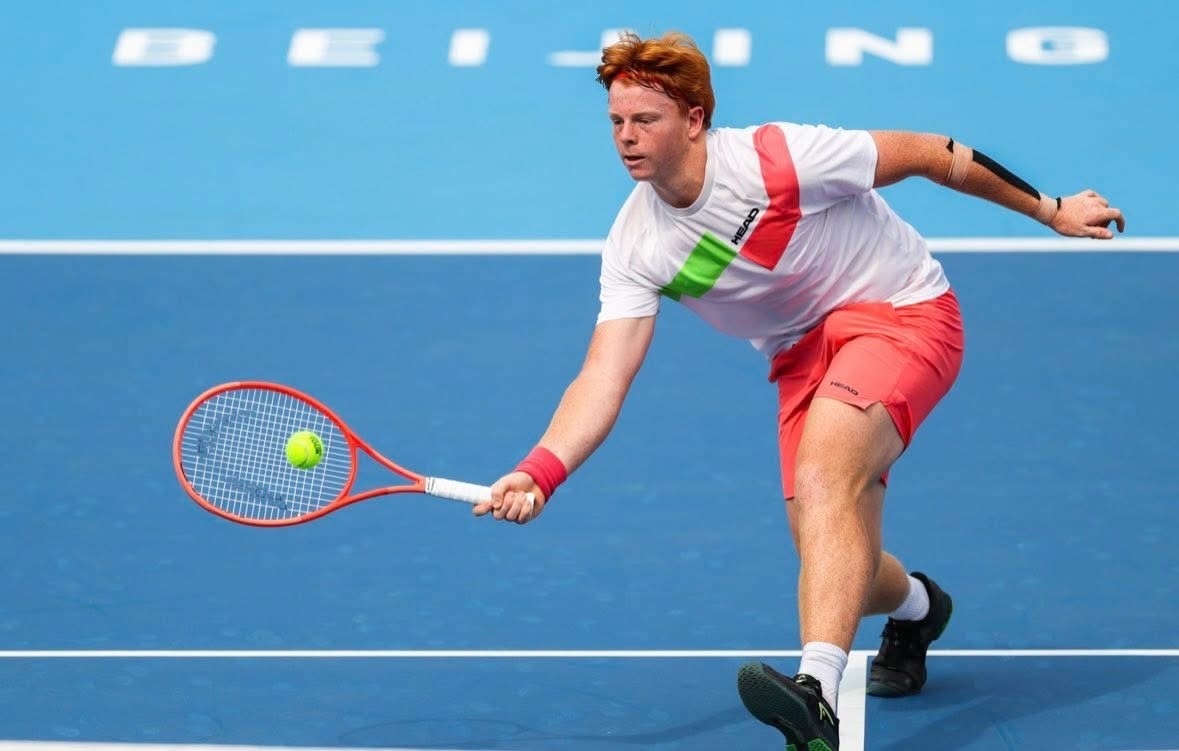 Versatile and always online: 18-year-old Jamie Mackenzie
MR:
Germany currently has a glaring problem in international tennis. There are hardly any talented young players. What's the reason for this? JM: We are indeed currently observing a transformation, a change. But many great tennis nations have gone through similar periods. Germany has, and continues to have, great success, especially with Alexander Zverev, but Jan-Lennard Struff, Daniel Altmaier, and Angelique Kerber have also made a significant impact. I am convinced that a new wave of successful German tennis professionals will emerge. However, the German school system is detrimental to elite sports. In other countries, online schooling makes it easier to maintain a high level of training.
MR:
Which young German players do you currently see as having potential? JM: There are, for example, Diego Dedura, Tom Gentzsch, Justin Engel, Max Schoenhaus, Julia Stusek, and Eva Bennemann. Diego Dedura recently attracted attention with a tournament victory on the tour and put on a brilliant performance at the BMW Open in Munich.
MR:
You're currently working as a coach at a club in Germany. What are your responsibilities there? JM: Yes, I work at TC Rheinstadion in Düsseldorf. I'm part of a great coaching team and I train ambitious junior and up-and-coming players there.
MR:
Currently, men's world tennis is dominated by Carlos Alcaraz and Jannik Sinner. What do the rest lack to catch up with these two? JM: I've been able to observe both of them closely over the past few years. Both are very detail-oriented and work meticulously on their game. They have an incredible will to constantly improve. Alcaraz, for example, is improving his serve, while Sinner is currently improving his net game enormously and incorporating more drop shots into his game. Both are at the top and constantly motivated to develop further.
MR:
What do you like about tennis in Germany? JM: Tennis has a great tradition in Germany. There are an incredible number of people in Germany who give everything for the sport of tennis.
Birthday: April 29, 1972
Birthplace: Tauranga, New Zealand
Married: No
Motto: Live life to the fullest, live your dream, take risks.
Tennis role models: Boris Becker, Andre Agassi
GO TO THE MARA ORGANIZER'S PAGE





Sign up now and be the first to know about new tennis hotels and tennis camps, as well as great promotions. You
can unsubscribe at any time. Please see our privacy policy .