[Tuesday, April 13, 2021 07:57]
Play pain-free with Sepp Baumgartner's tennis elbow therapy
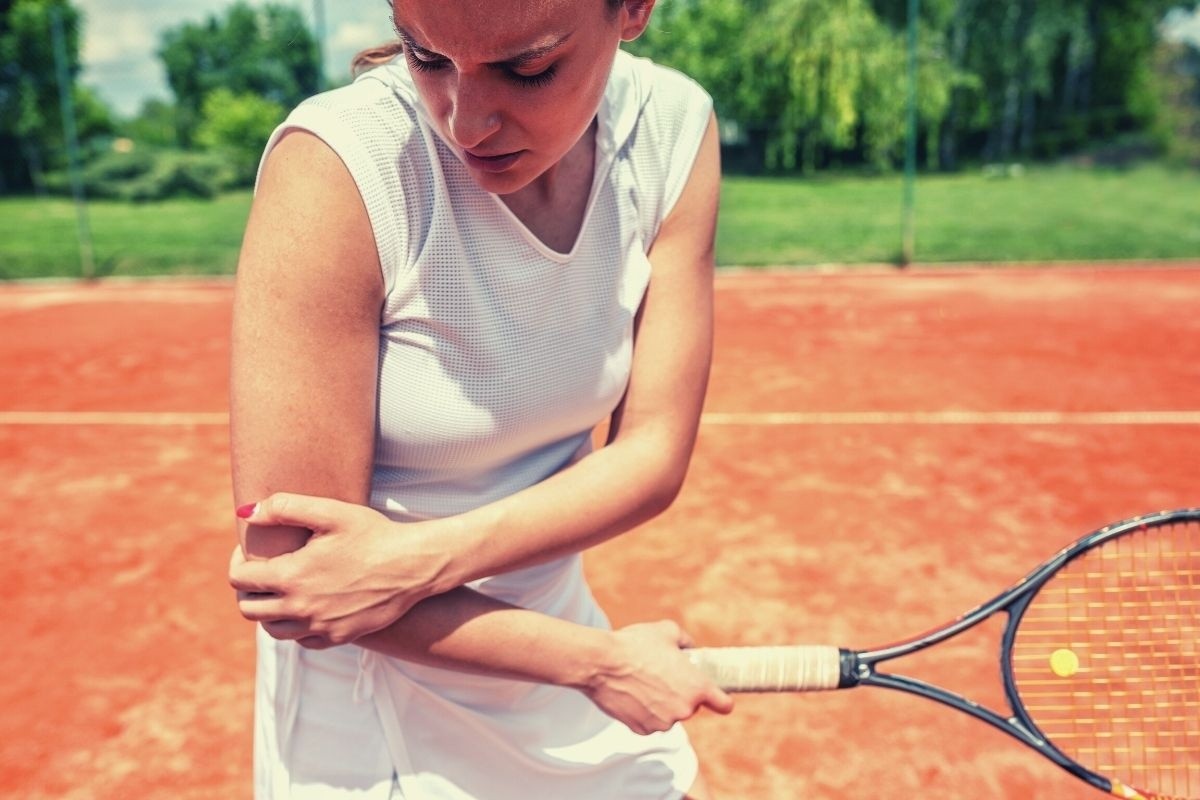
Many of you know it from painful experience: tennis elbow. Painful, often protracted, and bothersome. Anyone who has ever had tennis elbow knows how difficult it is to find a suitable therapy. For some, a new racket or a softer string tension is enough. For others, one therapy follows another. One of our tennis hotel owners has developed a very special tennis elbow therapy that addresses all stages and forms of the condition.
Sepp Baumgartner to share this tennis elbow therapy with sufferers at his tennis camps on Lake Waging , and with great success. Often, it's possible to soothe tennis elbow and permanently resolve the condition using various methods. You can learn how this is possible in Sepp's Tennis Elbow Therapy.
Preventive measures
Don't skimp on your technical training. A flawless stroke technique is especially important. In addition, supplementary cross-training alongside tennis is recommended.
Tennis is a one-sided sport, and the muscles are strengthened in only one direction. The spine is subjected to uneven stress, which can cause pain to radiate up the arm. The back, abdominal, and shoulder muscles, in particular, need to be trained on both sides.
Warm up before the game.
Choose appropriate equipment.
Your coach will be happy to advise you.
You should consider the following factors when buying your racket
- good vibration damping
- Beginners play with softer racket frames
- Choose a grip size that allows at least a little finger to fit between the middle finger and the ball of the thumb
- Choose a good synthetic string or, ideally, play with a natural gut string; beginners should string their guitars softer than experts.
Stretching after a workout is especially important. While training makes muscles stronger, they also tend to shorten. This often leads to muscle cramps, strains, and tendonitis. Therefore, stretch the most stressed areas immediately after your workout, ideally in a warm shower.
Acute tennis elbow
Acute tennis elbow is present when the irritation is still fresh or very intense.
The following measures have proven effective in treating acute tennis elbow:
- Keep your arm still. The longer the symptoms persist, the more protracted and difficult it will be to get rid of them. Anti-inflammatory treatment is also advisable.
- Applying cold running water or ice for two to three minutes immediately upon the onset of symptoms has a particularly positive effect. Important: Continue cooling several times a day, stretching the muscles as you go. After cooling, keep the arm warm, but under no circumstances should you artificially heat it or massage it, as this will worsen the inflammation.
- In case of extremely severe pain, you should definitely consult a doctor. Minor symptoms that do not subside after several days should also be treated by a doctor.
Caution is advised after immobilization and especially after injections. A carefully dosed, progressive training program is absolutely essential, as a relapse can be very problematic.
Only when the pain has largely subsided and the arm is resilient through rehabilitation training can tennis be cautiously resumed, preferably under the guidance of a coach.
Chronic tennis elbow
Chronic conditions are diagnosed when the irritation has persisted for months or years, but has subsided to the point where the arm can be used again. In cases of chronic conditions, immobilization or injections are often ineffective. Heat-active cold stretching therapy offers good prospects for success in these situations. When applied correctly, the combination of heat, strengthening exercises, and cold stretching creates optimal conditions for recovery. Heat and exercise promote blood circulation and stabilize the arm, while cold stretching inhibits inflammation and relaxes the muscles.
The following tips can promote the healing process for chronic tennis elbow:
- Heat therapy
is particularly important for chronic inflammation. Keep the arm warm during exertion, but also during the day and at night. Before intense exertion, such as before playing tennis, the muscles should be warmed up with specific exercises (see arm exercises below). Additionally, a circulation-enhancing ointment can be massaged in.
- Active Therapy:
Train the arm and shoulder muscles daily (see arm exercises). In cases of chronic inflammation, the arm can also be trained by playing tennis. However, this requires a targeted warm-up and good stroke technique. Through daily, moderate training, ideally once, but no more than twice a day, combined with subsequent stretching and cooling, chronic inflammation heals faster than with conventional immobilization.
Caution: Exertion without subsequent cooling will worsen the inflammation!
- Cold Stretching Therapy:
Immediately after exertion, muscles and tendons must be stretched and cooled, as the irritated muscle tends to shorten or even cramp, constantly overloading the tendon.
Here's how to cool: First, stretch for about 20 seconds under a warm shower, then stretch for about two minutes under a cold shower or while rubbing with ice cubes. Cold stretching keeps the muscle long and reduces inflammation.
Here's how to stretch while cooling: For pain on the outside of the elbow, make a fist with your fingers, straighten your arm, and rotate it inwards until your thumb is on the bottom. For pain on the inside of the elbow, straighten your arm and fingers and rotate them outwards until your palm is on top. After cooling, keep your arm warm with clothing (e.g., angora socks).
- Muscle relaxation:
Relaxing the muscles in the arm and especially in the shoulder and cervical spine area with massages often greatly promotes the healing process.
- A healthy diet,
including a varied diet (with little sugar, salt, and fat) and abstaining from alcohol and smoking, strengthens the body's inner healing powers.
- Tennis elbow support:
In cases of more strenuous activity, the arm can be relieved by a special tennis elbow support. The "Epico-med" support is recommended because its pressure can be easily adjusted via a Velcro fastener, thus completely preventing circulatory problems.
- Further tips:
Other treatment options that can positively influence the healing process include professional massages directly at the point of pain, acupuncture, reflexology, electrotherapy, laser therapy, shockwave therapy, and stimulation therapy. Surgery remains a last resort when all other therapies have been exhausted.
Exercises for daily training and warm-up before the game
Caution: Perform all exercises only to the point where you feel only slight pain!
- Arm muscles : Alternately bend the affected arm to the chest and then fully extend it. The free hand intensifies the exercise by applying controlled counter-pressure. Repeat each exercise 20-50 times.
- Finger muscles : Alternately straighten fingers and arms 50-100 times, then bend arms and close into a fist.
- Shoulder muscles : Circle your elbows 20-40 times on each side, both clockwise and counterclockwise. Hook your free hand onto your elbow to intensify the exercise. This exercise works one shoulder while stretching the other.
Duration of the healing process
As a general guideline, the healing process takes as long as the duration of the illness. In approximately 95 percent of cases, the chronic inflammation has largely subsided after six months. About 40 percent of these patients are then symptom-free. After another year, the damaged tendon has regenerated and is fully resilient in approximately 90 percent of cases.
In conclusion, it should be emphasized once again that the most important prerequisite for preventing or treating tennis elbow is flawless stroke technique. Therefore, consult a well-trained coach who takes your individual style into account. For example, someone who tends towards a backhand slice but executes it incorrectly should not switch to topspin, but rather focus on improving their slice.
Author: Sepp Baumgartner
to the Sepp Baumgartner tennis camp