
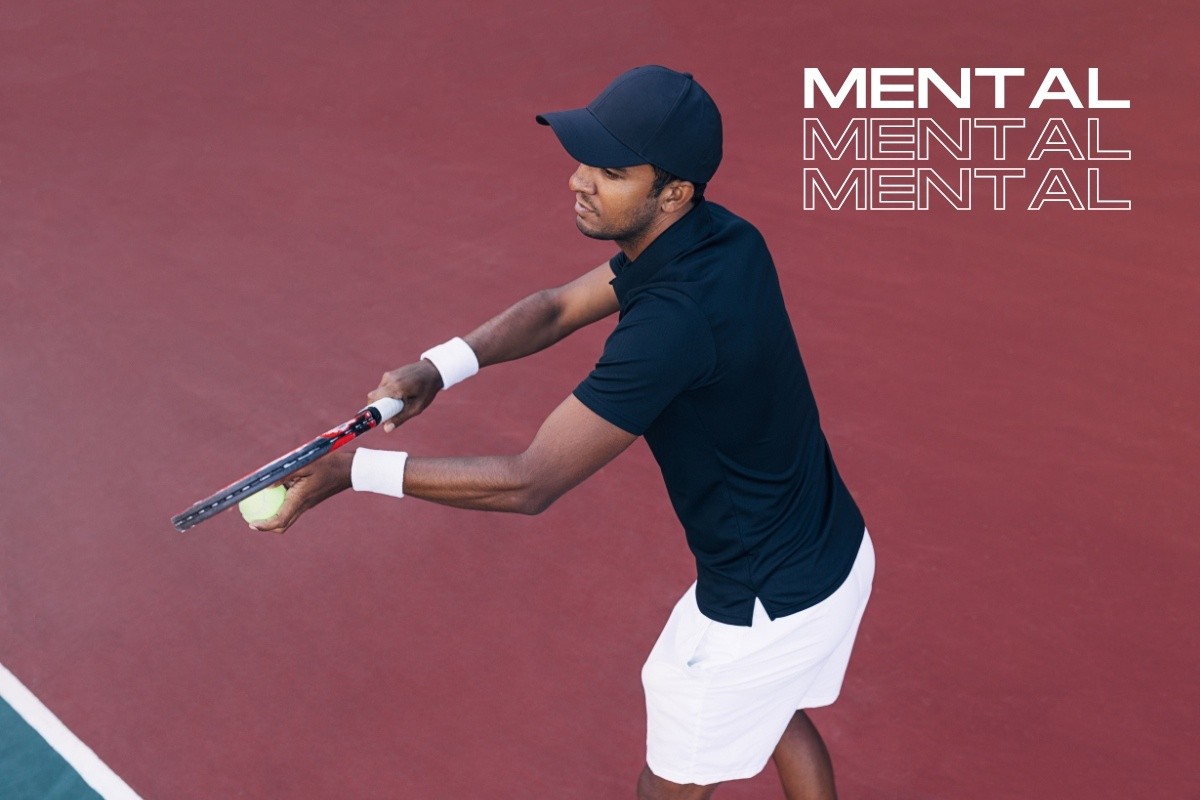
After introducing you to our mental expert, Dr. Sebastian Altfeld , at the end of last year, we—or rather, Sebastian—are now launching into our first mental tips for you. Training champions—who doesn't know them? Or would you even consider yourself part of this category, since everything always goes perfectly for you in training, but then falls apart in matches? In this article, Sebastian explains why setting goals is so incredibly important, both for your training and especially for every match. You'll also learn about the difference between outcome goals and action goals , as well as the crucial distinction between goals and desires . After all, we have so many desires in tennis. And to help you put Sebastian's mental tips into practice right away, we've provided a downloadable worksheet . So that training champions can become true winners! Have fun!
It seems like a simple question, doesn't it? Isn't the goal to leave the court as the winner? But this is often where, from a sports psychology perspective, classic reasons lie for why players don't reach their full potential and leave the court frustrated rather than happy. I think that every reader who actively hits a ball over the net has set themselves at least one of the following goals: "I want to win today," "I want to serve X*," "I want to keep the number of unforced errors at X* today," "I want to play the same way I did last week," "I want to impress the spectators today.".
The press usually focuses on players who have won a match or tournament, or who have achieved remarkable statistics such as the number of aces they've served. Wouldn't it therefore be worthwhile to aim for that as well?
From a sports psychology perspective, we want to approach this question and offer clear advice on what exactly increases the likelihood of achieving peak personal performance in a game or training session. After all, that's what everyone involved wants, isn't it?
Therefore, this article is not only for you tennis players yourselves, but also for coaches, board members, and parents of young talents. I hope you take something important away from it.
But first, let's start with this question: What do the goals set above have in common? They are attractive and motivating. For this reason, every player has surely experienced the night before a game when they've pondered what it would be like if the goal became reality. How good it would feel to achieve the goal and see how happy others would be. These are the pleasant advantages of this type of goal.
In fact, there is another commonality: they all involve results or consequences. Wanting to win, achieving specific statistics, avoiding mistakes, impressing others, or staying injury-free is referred to in sports psychology literature (e.g., Weinberg & Gould, 2000) as an "outcome goal." This might not sound particularly
exciting, but understanding this can significantly impact a participant's performance. We have already mentioned the advantages of this type of goal. However, since every coin has two sides, outcome goals must also have disadvantages. We can illustrate these with a thought experiment.
Let's say a player sets his sights on hitting six aces again today, as he managed to do last week. However, his opponent has adjusted to this, and besides, today just isn't his day. He hasn't hit a single ace so far, not even into the second set. What might happen if the player hasn't yet learned how to handle this situation effectively? He might start getting frustrated, tense up, lose focus, and choose and force serves that, in the current situation, are more likely to harm his own game. And "force" means choosing shots with a lower probability of winning, shots he wouldn't normally choose.
Problem: This can be the start of a negative spiral that many players will be familiar with. Poorer shots lead to greater dominance by the opponent in the rally, thus increasing the likelihood of the other side winning the point. Frustration increases, and performance declines further. This, of course, assumes that one doesn't already possess the skills to handle this situation or that other factors don't suddenly turn the tide of the game.
For example, a player might score an easy point thanks to a poorly played shot by their opponent. Or the opponent might slip, and the shot from the baseline simply finds its mark. These situations, arising from chance, could suddenly change the course of the game and provide a sense of security. But do we want to be dependent on this element of chance?
This thought experiment aims to illustrate one point: Setting a specific outcome goal for a performance situation like a game can lead to intense pressure that can impair performance, especially if the outcome is jeopardized by the course of the game. This can result in hesitant decisions
or decisions being forced.
The same applies to school or other performance-related areas. For example, a student might tell their parents, "I'm guaranteed to get an A today," and then the following happens: The first question on the test isn't immediately understood upon first reading. The likelihood of rushing and stress, which can negatively impact the rest of the process, increases due to these prior expectations.
But let's get back to tennis, and here's an important point. Some players intuitively set helpful goals and might therefore read what's been said so far with surprise. These people have usually already acquired a valuable skill, quite by chance.
But first, let's look at the second disadvantage, besides the pressure. To that end, consider this question: What factors influence whether or not someone wins a point in tennis?
Here are a few factors: striking technique/ability, striking position, mindset, preparation of the shot, dealing with previous misses, opponent's position, ball quality, type of surface, disturbances from spectators, referee decisions, chance, strength of the opponent and of course many more.
I hope we agree that these are all factors that influence whether I score a point or not. The importance of each factor varies from match to match. For example, it makes a difference whether I'm playing against a top-seeded player or against someone who is objectively weaker.
The far more important question, however, is this: Which factor does a player have 100% control over? If you go through the list, not that many factors actually remain. And this is a significant drawback of outcome goals: They are not 100% controllable. For this reason, from here on out, I will only refer to them as aspirations. Achieving certain statistics, winning a rally or a match, impressing someone, or even winning a tournament are aspirations. They are not solely within my control, even if we might wish otherwise.
Don't get me wrong. Aspirations are great. They motivate us to train and work hard. They inspire top athletes to sacrifice various things to make a particular goal a reality. That's why aspirations are important. They help us stay focused.
But do we really want to go into a match with wishes in mind? Because they can actually hinder our performance. Sure, they're motivating. But motivation can sometimes lead to over-motivation. And don't we want to increase the likelihood of a good performance?
Basketball coaching legend Dean Smith already knew this: "I think if you talk about winning as the end result too much, it interferes with winning. I tried not to look at the score when I was coaching. Were we playing well? Were we playing hard? Let the score take care of itself.".
For this reason, tennis players and coaches should set themselves goals for a match that the players can control 100 percent and focus on. These goals are called "action goals".
For example, tennis players I coach set themselves goals such as:
These are just a few examples. And one disadvantage is immediately apparent: thinking or talking about these things is nowhere near as appealing as talking about desires.
However, they do help us achieve our goals in the first place. They are implementable regardless of the outcome, don't create unnecessary pressure on top of what's already there, and reflect only our own performance. The outcome is NOT the same as performance! And this also applies in contexts like school (e.g., grades).
So, what's the takeaway? Before a game or training session, players should ask themselves the following questions: "What behavior do I need to exhibit to positively influence my desired outcome? What specific behavior do I want to display right now? What should I focus on?" There's just one problem. It's similar to changes in technique or tactical guidelines. In emotionally charged situations, we forget these things very quickly. Moreover, our minds tend to jump to the outcome, especially in these situations. Unfortunately, this happens automatically and unconsciously. This is one reason why we feel pressure: "Today is particularly important. Nothing can go wrong today," "Today I have the chance to win the tournament." These are the moments when players' behavior often changes.
But how can you remember what should actually be your focus in crucial situations? By creating a written reminder. Write down your action goals somewhere so they remind you when it matters. For example, on your water bottle or your racket. If you'd like some support with this, I've created a worksheet for practice. You can download it using the QR code below. I hope this article helps you notice what your intention is when you step onto the court for your next match. Is it a wish or a goal?
Get the worksheet on this topic right away.
As a sports psychologist and psychotherapist, Sebastian supports various competitive and professional athletes from different sports in dealing with performance pressure, stress, and high demands. "Performing when conditions aren't optimal" and "be comfortable to feel uncomfortable" are his mottos. In addition to this work, he is a co-developer of the online program Ready2Perform (www.ready2perform.de), which aims to teach pressure management skills to a wider audience.

"There is no passion to be found in shrinking back and settling for a life less than what one is capable of living." - Nelson Mandela
The online course "Ready2Perform" (www.ready2perform.de) aims to equip people with the necessary skills to master high-pressure and performance-oriented situations. It is designed for individuals who need or want to demonstrate their abilities in exams, performance tests, presentations, or critical moments such as emergencies or professional challenges. In such moments, when learned and practiced skills must be applied, people often fail not due to a lack of knowledge or ability, but rather due to the effects of pressure and a lack of coping skills. An elevated heart rate, racing thoughts, or strong feelings of insecurity can impair performance.

The "Ready2Perform" program, whose costs can be fully covered by health insurance, focuses on preventing these detrimental consequences and empowering people to perform at their best even under pressure. "Ready2Perform" offers more than just approaches for specific situations. The skills learned are designed to be used in everyday life, strengthening a person's resilience and psychological flexibility.
The online program "Ready2Perform" offers a mix of interactive instructional videos, practical experiments, and clear explanations to teach the necessary skills for working with pressure. The course consists of
So what are you waiting for? Do you want to become Ready2Perform?
A note from us: this article is not sponsored and we receive no commission whatsoever. We have personally experienced Sebastian's online course and recommend it wholeheartedly.














Sign up now and be the first to know about new tennis hotels and tennis camps, as well as great promotions. You
can unsubscribe at any time. Please see our privacy policy.